With Our Elderly Sisters: A School of Life

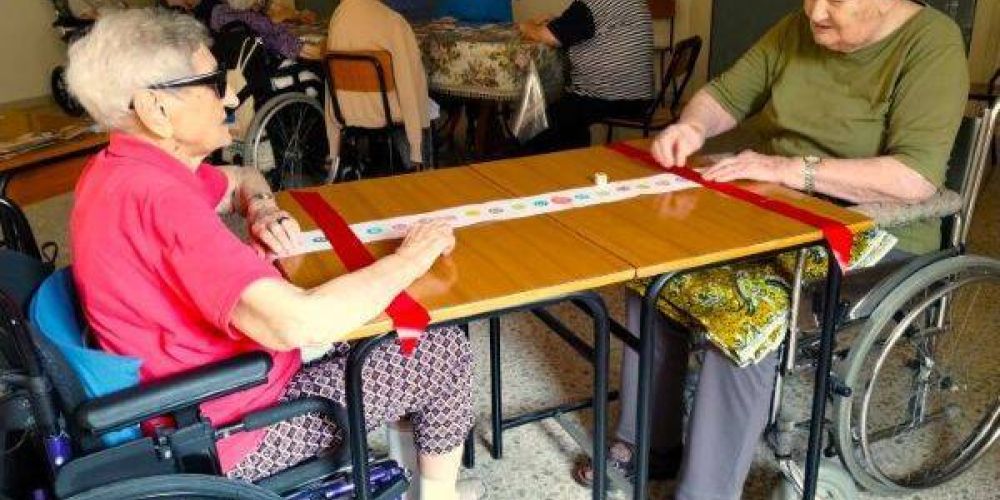
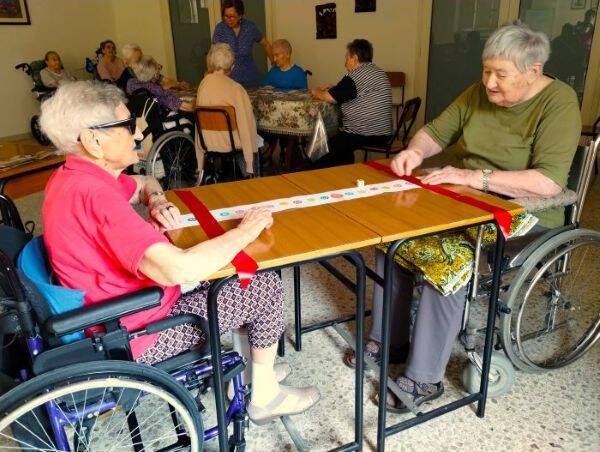
Reyna Hernandez, a Mexican Xaverian missionary, spent three and a half years alongside the elderly and sick sisters at the Mother House, entrusted with organizing their morning activities. An unexpected assignment that called her to embark on an inner journey.
First Impressions
When I was asked to come to Italy to organize activities for the sisters on the “third floor,” I remained silent for a moment. I had never considered the possibility of serving our elderly and sick sisters. Then I thought about how our missionary life sometimes calls us to undertake unexpected services and how other sisters before me had already carried out this task. So I accepted, even though I had no idea how I would go about it.
At first, I worked alongside Hélène and Mrs. Gemma Campanini, a volunteer. After a few months, Hélène left for the mission in Congo, and I continued working with Mrs. Gemma. I wondered how I could joyfully carry out my task with the sisters entrusted to my care. Most of them used wheelchairs, had different health conditions, and were no longer able to live independently. Each had her own aches and pains and experienced the difficulties that come with such circumstances.
During the first few months, I often went to bed worried, wondering what I could propose the following day and how I could find the materials needed for the activities. So I began recycling all kinds of objects that might be useful.
First Lessons
I realized that accompanying these sisters meant encouraging simple and spontaneous interaction. At first, even though I was aware of their circumstances, I sometimes wanted to treat them as though they were young and healthy. Gradually, their frailty and limitations taught me to be more attentive in adapting the activities to their needs. It was important not only to know them outwardly but also to understand their reactions, words, silences, complaints, and moments of boredom, recognizing how advancing age and diminishing energy affect the body. Some activities needed to be adapted, and new, more suitable materials had to be prepared.
All this also involved working on myself and developing an inner disposition. My physical presence among the elderly sisters did not automatically mean that I loved them, and the activities, however beautiful, were meaningless if the most important thing was missing: love.
Throughout the day, it became a habit to ask myself questions while keeping my eyes fixed on Jesus: “Did everything go well? How do you feel? Are you happy with what you did today?”
If the answer was positive, I would ask myself further questions: “Are you happy because you did your work well or because you loved the sisters freely and selflessly? Did you allow them to touch your heart and disturb your comfort? Were you patient, empathetic, understanding, and compassionate? Did you bring them joy? Were you able to recognize me in them?”
My response was a silence that became prayer. Each day, I began asking for one thing at a time: “Jesus, give me your heart. Give me your joy. Help me love the sisters with a sincere heart. Let me find joy in this service. Help me see them in all their dignity, rather than as objects that have outlived their usefulness.”
The voice of the Spirit warmed my heart and gave meaning to everything I was experiencing.
The Challenge
Every day, I prepared for the following morning, hoping the sisters would have an enjoyable and entertaining time. The frailest sisters participated simply by being present, but their eyes followed everything that took place during those hours of activities. Some sisters were reluctant to participate, especially when I introduced new activities or games. Those who were able to do so preferred to go out for a walk.
How could I not understand them? These were sisters who had lived their missionary vocation with dedication and responsibility, working tirelessly for others, especially those most in need, and spreading the Gospel. Now they found themselves far from the lands where they had given their lives, their youth, and their love. They felt the weight of old age and illness and were compelled to live in a different reality.
Their gradual adaptation to this new situation is admirable. Prayer is a natural part of their lives: they participate in the Eucharist, community meditation, the Rosary, and Eucharistic adoration. They keep up with world news and, through their prayers, travel spiritually to every corner of the world.
Finding Our Way Forward
After two years, I finally felt more at ease and was able to continue the activities with the sisters with greater serenity. By explaining simply the importance of each activity I proposed, the sisters began to understand that what we were doing was an integral part of their well-being.
Together, we were experiencing a process of positive change, overcoming some of our difficulties. They became more motivated and enthusiastic, encouraging one another to participate in the various activities. Some of them no longer wanted to go for a short walk with the nurse because they were enjoying the activities or games so much that they preferred to stay until the end.
Whenever one of them had not yet had a turn in a game, the others would point it out to me. They loved competitions and sometimes even argued among themselves; none of them wanted to lose! It was lovely to watch them, and I gladly let them carry on amid laughter.
They surprised me when, at the end of the morning, they would ask, “What games are we going to play tomorrow? What new things will you bring us?”
From time to time, volunteers come to lend us a hand, and during the summer, our younger sisters also help us. They, too, contribute to making this mission at the Mother House flourish.
A School of Life
The three and a half years I spent with the elderly sisters allowed me to gain some understanding of their lives and draw closer to their reality.
Their missionary vocation does not end with old age or illness; it neither goes on hold nor retires. On the contrary, they live it with an attitude similar to that of Jesus in the Garden of Gethsemane: they surrender themselves ever more fully into God's hands, accepting his will and offering their lives. This is what I witnessed in many of the sisters I came to know who are now resting in God's peace.
It was they who welcomed me into their world, into their diversity, their silence, their hearts, their joys, their moments of anger, and their tears. I wanted them to let their imagination and creativity soar, to continue dreaming, and, above all, to interact with one another.
We had fun joking and dancing with Mrs. Gemma, Caterina Albertini, and the other sisters, even if all we could do was move our arms. We even played with the wheelchairs like little girls. We felt free and innocent, without worrying about being judged.
I often thought of Jesus' words: “Unless you become like little children, you will not enter the kingdom of heaven.”
“We all have a child within our hearts,” I would tell them. “Let us help one another awaken that child and bring it out, even at this stage of our lives. I am sure that the child within us holds a pure heart: a heart that trusts others, loves spontaneity and simplicity, marvels at little things, and, besides throwing tantrums and crying, still knows how to laugh, rejoice, and enjoy every moment of life.”
“The child who does not play is not a child, but the adult who does not play has forever lost the child within,” wrote Pablo Neruda.
In those peaceful and joyful moments, I would look at the sisters and feel as though I were touching a little piece of heaven. I was deeply moved and reflected on the most important things in life, drawing strength, vitality, and joy from those experiences.
I remember the words of some of these sisters:
“The more time passes, the more I realize that only what is essential remains.”
“Everything fades away… only God remains.”
“When I was on mission, I was always rushing around, preparing, organizing, and taking care of everything. I was the main protagonist. Now, in my wheelchair, it is Jesus who carries out the mission.”
“Now I am poor, but I feel privileged because of God's goodness.”
“I thank God for everything that has been and for everything that is yet to come. Surely, his grace will never fail me.”
“I look forward to my own Easter.”
“Jesus, you must help me.”
“He has given me much, and much will be asked of me.”
“May the Lord forgive me for everything I have not done well.”