Go and Give Your Life
For nineteen years, I lived in Burundi, a land marked by the beauty of its people and by the wounds of violence. Before leaving, in the year 2000, I passed through our Mother House in Parma and prayed in the Chapel of the Martyrs. There, in the place from which Saint Guido Maria Conforti used to send forth missionaries, I came to understand that mission is not sustained by power, but by the witness of those who love to the very end.
Conforti wrote that the missionary carries only the cross of Christ and remains ready to shed his blood for the good of his brothers and sisters. In Burundi, these words ceased to be merely a phrase and became faces, names, and living stories.
I met Xaverian brothers who gave their lives with admirable faithfulness. Among them, I will always remember Ottorino Maule, Aldo Marchiol, and Catina Gubert, the martyrs of Buyengero. I also encountered many men and women who, without dying a violent death, spent their lives day after day serving the poor, the sick, and the forgotten. They taught me that martyrdom begins long before blood is shed: it is born in the daily gift of oneself.
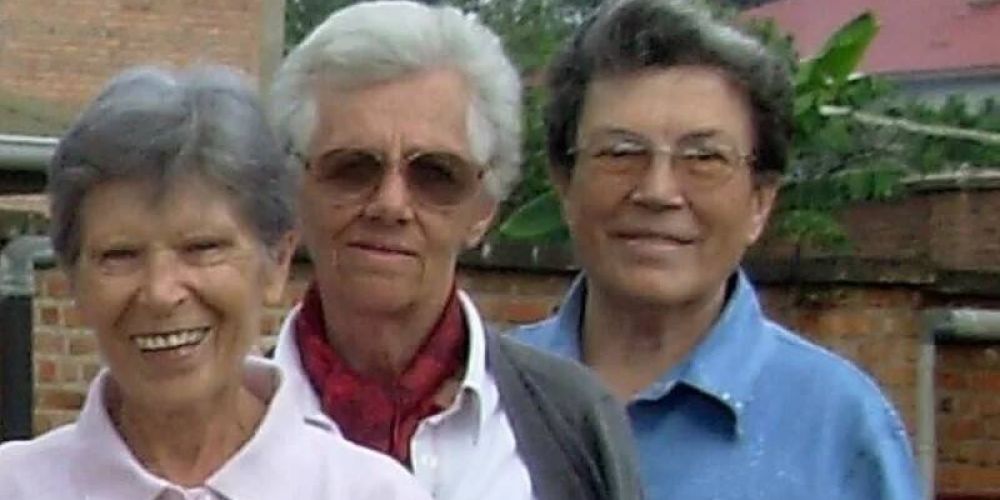
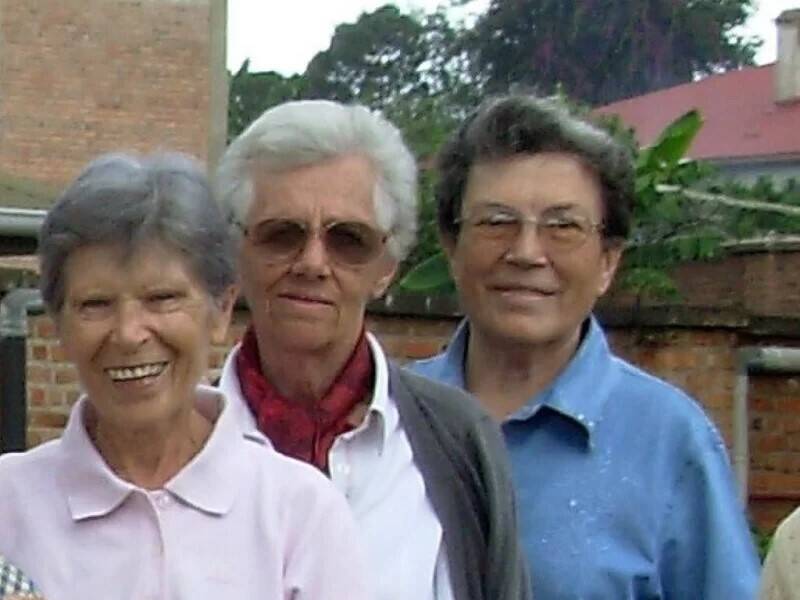
Yet when I think of Conforti’s words, “The Missionary is the most beautiful and sublime personification of the ideal life,” three names illuminate my memory: Sisters Lucia, Olga, and Bernardetta, brutally murdered on September 7 and 8, 2014, in the parish of Kamenge.
I do not wish to remember only the horror of those hours. Their true martyrdom had begun long before, in the silent faithfulness of lives completely offered to God. All three had dedicated decades to mission in the Great Lakes region, between Congo and Burundi. They were different in character, age, and responsibilities, but they shared the same joy of belonging to Christ and to the Burundian people.
Many times I asked myself why, already elderly and physically frail, they had decided to return from Italy to support that community in one of the poorest and most dangerous neighborhoods of Bujumbura. The country was going through a period of deep political tension. They could have chosen a safer place, yet they remained there, with a discreet, simple presence filled with hope.
The answer was never found in human courage alone. It was found in the Person who sustained them. They contemplated Christ crucified and discovered His face in the Burundian people, themselves crucified by injustice and suffering. Their decision to remain was a response of love.
Whenever I went to visit them, their sense of humor always overcame any sadness. They would laugh about my youth and say, “Here comes the young missionary, full of energy! Look at us, with our walking sticks and all our aches and pains, but still on mission!” Then they would add, “Give everything. Do not grow weary. There is so much still to be done.” They were handing on a legacy to me.
In their house there was a small chapel. It was a humble place, yet filled with the presence of God. There we shared a spiritual retreat only a few months before their deaths. It was also there that I heard Sister Olga’s confession many times. I always left that sacred space with the certainty that prayer was the hidden heart of their missionary fruitfulness.
Lucia was the most fragile in health. She remained at home preparing meals, caring for the sacristy, accompanying the altar servers, and carefully tending to the sacred vessels. She did everything with a disarming joy. Bernardetta ran the sewing workshop and accompanied many women from the neighborhood. Her discretion, her smile, and her peace spoke of a Gospel lived more than preached.
Olga was different. Despite being the eldest, she tirelessly walked the streets of Kamenge to visit the elderly, the sick, and poor families. She entered places where others were afraid to go. She carried neither money nor protection. She carried consolation, hope, and words born from the love of Christ.
Then came the night I will never forget. On September 7, I lifted the tortured bodies of Lucia and Olga amid an unbearable silence. I took care of the legal procedures and accompanied their bodies to the morgue, carrying out the mission my superior had entrusted to me. Bernardetta remained beside us with a serenity that still moves me today. She cared for her sisters even in death.
We returned to Kamenge around midnight. I said goodbye to Bernardetta without imagining that it would be the last time. A few hours later, news of the horror came once again. She too had been murdered. I returned to the morgue with a shattered heart. The questions were countless; there were no answers.
In the midst of that pain, I remembered a conversation with Olga. When her superior asked her to return to Burundi, she answered simply: “I am going back to give my life; it is what the Lord is asking of me.” Those words became forever engraved upon my heart: “Go and give your life.”
Today I understand that martyrdom does not glorify violence; it glorifies the love that refuses to abandon the most vulnerable. Lucia, Olga, and Bernardetta did not seek death. They chose to remain. Their blood was the final word of lives that, for many years, had been proclaiming the Gospel through humble gestures, constant prayer, and joyful service.
Burundi taught me that authentic mission always has a human face. It has hands that serve, knees that pray, and a heart willing to love without conditions. Whenever I remember these three sisters, I return spiritually to the Chapel of the Martyrs in Parma and renew my own vocation. They continue to proclaim that the most beautiful way to evangelize is not through power, but through a love capable of giving one’s entire life for one’s brothers and sisters.